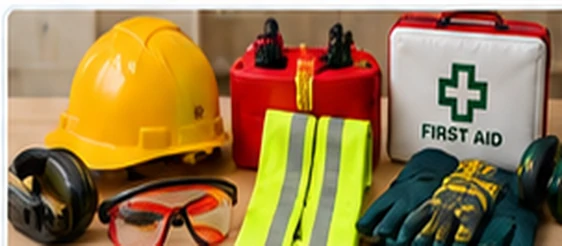
Facilities teams sometimes encounter loud maintenance equipment or mechanical work. Hearing protection is selected based on measured or assessed noise exposure, individual fit and the applicable safety program—not merely the loudest-looking product. The uploaded inventory includes hearing-protection product types among a broader safety assortment. The following comparison is a purchasing reference rather than a substitute for an occupational noise evaluation.
Compare the options
| Protector type | Practical considerations |
|---|---|
| Disposable foam earplug | Portable and low-cost per pair; correct insertion and fit are essential. |
| Reusable pre-molded earplug | May reduce disposables; needs cleaning, storage and individual fit. |
| Banded earplug | Convenient for intermittent wear; check position and model instructions. |
| Over-ear earmuff | Quick donning; seal may be affected by glasses, hair or headgear. |
| Dual protection | Some high-noise situations may require both; follow qualified hazard assessment. |
Understand the Noise Reduction Rating
NRR is a labeled laboratory rating, not a promise that the wearer receives the stated number of decibels of real-world reduction. OSHA has specific procedures for estimating adequacy; proper fit and training are essential. Compare protectors in the context of actual noise exposure rather than choosing solely by the largest NRR number.
Comfort and equipment interactions
Earmuff cushions must seal around ears without obstructions. Glasses, hard hats and other protective equipment can change fit. Earplugs must be inserted according to instructions; disposable plugs generally should not be shared.
Hearing protection is part of a program
Noise reduction at the source, equipment maintenance and exposure controls are important. Employers may be subject to hearing conservation rules based on exposure; the program may require measurements, training, testing and provision of appropriate protectors.
How to compare approved purchases
Hearing-protection selection should begin with the employer’s required exposure assessment. Within the approved options, procurement can then compare sizes, replacement cushions, hygiene, packaging and wear comfort. A large disposable earplug case may make sense for many occasional authorized users, while durable earmuffs may be practical for assigned maintenance equipment. Keep worn seals, dirty plugs and broken headbands out of service and follow the model-specific inspection schedule. Do not substitute music headphones for required hearing PPE.
School purchasing example
A maintenance team uses loud grounds equipment. Rather than ordering earmuffs for everyone by color, the safety lead reviews measured exposure, approved device ratings, fit, other PPE and individual comfort. Purchasing records the approved protector models and replacement cushions or plugs.
Before you order: checklist
- Use a competent noise assessment for the task.
- Choose protectors with appropriate labeled attenuation.
- Evaluate individual fit and interaction with other PPE.
- Follow training, hygiene and replacement requirements.
- Document approved models and consumable quantities.
Common questions
Are noise-canceling music headphones hearing protection?
Not unless they are specifically designed and rated as suitable hearing protective equipment.
Does a larger NRR always mean better real-world protection?
No. Fit and use can dominate actual attenuation, and evaluation follows the applicable occupational method.
Technical reference: OSHA occupational noise guidance. Check product-specific labels, instructions and current local requirements before ordering.