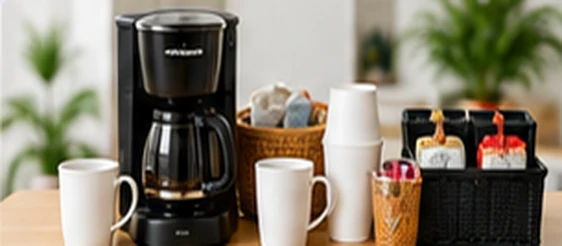
A school breakroom may serve teachers, administrative staff, custodial teams, and visitors at different times of day. Keeping it supplied is easier when someone knows what is used regularly, which products are shared, and where reserve stock is stored.
Divide the room into useful supply groups
Instead of ordering from a single miscellaneous list, organize materials by function: beverages, coffee supplies, foodservice disposables, cleaning and paper products, and any small appliances or accessories that require maintenance.
A simple breakroom list might include coffee and filters or compatible beverage pods, cups, stirrers, napkins, paper towels, dishwashing supplies, and trash liners. Not every school provides all these items; include only products the institution has chosen to supply.
Record package compatibility
Many breakroom items are tied to the equipment already in use. A coffee maker may require a particular filter format; a beverage system may use a specific pod or cartridge design; a dispenser may need a compatible refill.
Before purchasing a replacement, record the actual appliance or dispenser model and check the manufacturer's approved consumables. Similar product descriptions do not guarantee compatibility.
Estimate needs from real usage
Start with a simple two- or four-week observation period. Record how many cups, napkins, coffee packages, or other replenishable items were issued. This provides a stronger forecast than assuming every employee uses identical quantities each day.
For illustration, if a staff room uses 150 cups per week, a four-week projection is 600 cups before a reasonable reserve. Compare that quantity with actual package and case counts. If cups are stocked in sleeves, convert the forecast to the correct number of sleeves before ordering.
Set practical reorder points
| Supply | What to record |
|---|---|
| Coffee or tea | Type, compatible system, issued quantity |
| Cups and lids | Size and fit, pack count, expected weekly use |
| Napkins and towels | Format, dispenser compatibility if applicable |
| Foodservice supplies | Forks, spoons, plates or other approved items |
| Cleaning items | School-approved products, storage and usage |
Store unopened reserve stock neatly in a labeled location. An employee should not need to open multiple cabinets or move supplies to discover whether more cups are available.
Account for calendar changes
Breakroom demand is unlikely to be identical every week. Staff development days, parent meetings, summer programs, testing periods, and school closures may change use. Review the calendar before repeating the previous month's order without adjustment.
For shared events, keep a separate event supply estimate instead of artificially inflating the routine breakroom stock level.
Coordinate with offices and facilities
Certain items may be purchased centrally, such as paper towels, cleaning products, and waste liners. Avoid ordering a separate breakroom-only product if the same approved specification is already maintained in a nearby stockroom.
A combined office and breakroom inventory can track product descriptions, package size, on-hand quantity, reorder trigger, and preferred delivery location. Use identical product names in the spreadsheet and the purchasing request.
Think in useable units, not only cases
Bulk pricing may reward larger quantities of a product, but the school still needs to store and use them. Check product shelf life or handling instructions when relevant, and avoid buying more than the institution can reasonably use. Breakroom purchasing is most efficient when ordering quantities reflect actual habits and school calendars.
A predictable small routine, reviewed each month, is more useful than repeated emergency shopping trips for the same five missing items.