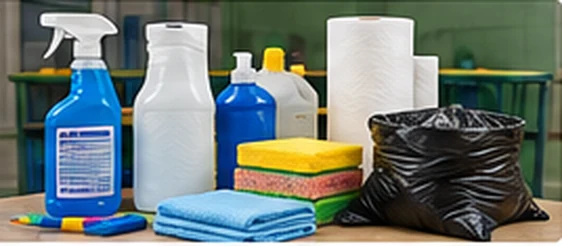
Custodial buyers need to match cleaning chemistry to the soil and surface. A classroom countertop, greasy maintenance tool and food-preparation area do not automatically require the same cleaner. The SPR catalog contains multipurpose and all-purpose cleaners as well as specialty products; the labels, dilution instructions and surface restrictions determine the real application.
Compare the options
| Category | What it is intended to address |
|---|---|
| General-purpose cleaner | Routine soils on surfaces listed by the manufacturer. |
| Degreaser | Grease and oily deposits; may contain stronger surfactants or alkalinity. |
| Neutral cleaner | Typically formulated for compatible maintenance surfaces or floors; confirm pH and finish suitability. |
| Disinfectant cleaner | May carry registered antimicrobial claims if the specific label says so. |
| Ready-to-use vs. concentrate | Convenience versus dilution, mixing equipment and staff training. |
Match the product to the surface
Some products can damage painted surfaces, floor finishes, aluminum, glass coatings or natural stone. Review manufacturer directions and test an inconspicuous location where appropriate. The word “all-purpose” should not override specific exclusions.
Concentrate calculations
A 1:32 concentrate means one part concentrate to 32 parts water when expressed that way on the label; ratios can use different conventions. Follow the label exactly rather than extrapolating. Provide labeled dilution bottles and suitable PPE where required.
Safety and storage
Never mix cleaning products unless the manufacturer explicitly directs it. Maintain required safety data sheets, labeled containers, ventilation and staff instruction. Separate chemical use from the distinct question of whether disinfection is indicated.
Buying concentrated chemicals without waste
When comparing concentrated products, calculate the cost per correctly prepared ready-to-use gallon only after verifying the dilution instructions. A cheaper-looking concentrate can require more chemical per gallon, and a diluted product may be inappropriate for certain surfaces or applications. Record both dilution and intended use in the custodial inventory. If a facility uses automatic dilution dispensers, purchase the cartridge or connector specified for that system; do not assume any bottle of the same cleaner will fit.
School purchasing example
A school maintenance area needs an approved degreaser for a greasy mechanical part, while classrooms use a surface-compatible everyday cleaner. The purchasing list keeps the chemical names, manufacturer dilution directions and approved areas distinct instead of buying one “industrial cleaner” for both.
Before you order: checklist
- Identify soil type and target surface.
- Confirm labeled uses, exclusions and dilution.
- Check whether disinfection is actually required.
- Review SDS, PPE and storage instructions.
- Estimate ready-to-use volume rather than just concentrate price.
Common questions
Is a degreaser always a disinfectant?
No. A cleaning or degreasing claim does not establish an antimicrobial claim.
Can stronger concentrate always be used on difficult grease?
No. Follow manufacturer dilution and dwell directions; stronger-than-labeled mixing can damage surfaces or increase risk.
Technical reference: EPA: Cleaning and disinfecting guidance. Check product-specific labels, instructions and current local requirements before ordering.