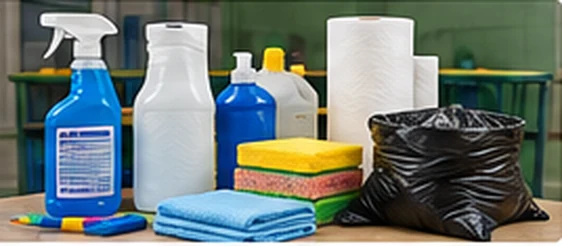
Facility buyers often use “cleaning cloth” as a broad term for very different products. Reusable microfiber cloths, cotton shop towels and disposable wipers vary in absorbency, lint, durability and care needs. Your catalog includes several classes of cleaning wipes and towels. A school can often simplify orders by defining which material is approved for each recurring task rather than stocking one towel for everything.
Compare the options
| Material | Where it may work well |
|---|---|
| Microfiber cloth | Dust and soil pickup on compatible surfaces; laundering requirements matter. |
| Cotton shop towel | General wiping and absorbency; may produce lint depending on weave. |
| Disposable wiper | Single-use contamination control or messy tasks; creates repeat waste. |
| Nonwoven shop wipe | Engineered absorbency or strength for a particular liquid; review chemical compatibility. |
| Polishing cloth | Low-lint surface finishing; not automatically suited for disinfecting. |
Separate cleaning from disinfecting
A cloth removes soil, but it does not itself confer a disinfectant claim. When using a registered disinfectant, follow the product label, application method and contact time. Check whether reusable cloths are compatible with the selected chemical.
Plan a realistic laundry cycle
Reusables require collection, segregation, washing and dry storage. Fabric softeners and other additives can affect some microfiber performance. Buy enough to cover washing downtime rather than assigning one cloth to an entire shift.
Color coding is a workflow tool
Some schools reserve different colors for restrooms, foodservice and general surfaces. The color scheme is a local practice, not a universal safety standard. Train staff and stock replacement colors consistently.
Build a task-to-cloth matrix
A simple staff chart can have columns for surface, soil, approved cleaner, towel material, reusable or disposable, and disposal or laundry route. That makes inventory requirements visible: some schools need more absorbent disposable wipes in workshops but washable microfiber for routine classroom furniture. For reusable materials, count complete sets for active shift, collection bin and clean reserve. For single-use materials, estimate consumption per task and check package counts. This helps compare full operational cost rather than treating one cloth as the answer to every job.
School purchasing example
A custodial supervisor uses reusable cloths for routine desks and washable surfaces and designated disposable wipes for a separate task. The supply list specifies size, material, care instructions and approved chemical compatibility so replacements are not selected by color alone.
Before you order: checklist
- Define the cleaning task and surface.
- Choose reusable versus disposable by workflow.
- Check lint, absorbency and chemical compatibility.
- Plan laundering and segregation when reusing.
- Compare cost per usable task, not price per carton.
Common questions
Is microfiber always safe for every surface?
No. Check the finish and manufacturer cleaning instructions.
Can a microfiber cloth replace a disinfectant?
No. Cleaning material and any required disinfectant are separate considerations.